ֲýƵ

Skip navigation

A step by step guide to applying to university

When applying to university there can be a lot to navigate, so we've put together a quick guide to help you understand the process.

Before you start the application process, it is important that you do your research, here are some topics that you should take the time to consider:

The Course: Deciding what course to study can be a challenge and it’s one that many people face. With so many options available to you, it can be easy to feel lost. To find the course that is right for you, think about what interests you and what your ambitions are for the future. 

If you’re struggling to figure out what you want to study, why not try out 

You can find out more information about our wide range of courses here.

The University: It is also important to research what university is best for you. Make sure to research which universities are best set up to help you achieve your goals and ambitions. A great tool to use when looking for information on a university is This tool displays information about universities and their courses, such as student satisfaction rates and starting wages.

Another important aspect is to choose a university in a city that will fit your life-style. There are many fantastic cities across the UK;  is a great tool to find out more information about the many cities in the UK, and the universities within them. In 2020 they voted Newcastle the best student city in the UK.

Clubs and Societies: University is the perfect place to meet new people and make friends for life. Clubs and societies offer a great way to make meeting new people with similar interests easy. Make sure to look into what clubs and societies universities offer. Discover Northumbria’s clubs and Societies on the 

Career Support: Having a university that supports you with not only your education but also your career is an extremely valuable tool. Take the time to research what kind of support each university offers in helping advance your career. At Northumbria our Career Service are here to support our students from their first year to beyond graduation. You can find out about Northumbria’s Career Services here.

Accommodation: Where you live forms a big part of your university experience, and researching the types of accommodation available can relieve a large amount of anxiety and stress. Discover the great offers we provide on accommodation.

Finally, why not visit us at one of our open days where you can see first hand what Northumbria has to offer.

Now that you have done your research, it is time to begin the application process. This will be done through UCAS. To make an account, follow this . Make sure to store your account information somewhere safe. Why not download or print our application checklist and store it on there.

Once you’ve made your account, you can begin completing your application form. This step can take a while, but don’t worry, you don’t have to complete it all in one go, your progress can be saved so that you can come back to it and complete each step when you’re ready.

Personal Information: The first step in the process is to fill in your personal information. This will be information such as residency status, personal circumstances and how you plan to fund your degree.

Education History:  Next, you will be required to enter your education history. For this section you must enter all qualifications from secondary education onwards. This can also include pending qualifications. Here is a useful link to . If your qualification is not listed, you will need to send your results yourself to your chosen course providers as soon as you get them.

Employment History:  In this section include any full time or part time employment that you have had. Any unpaid/volunteering work that you have shouldn’t go in this section; save this information for your personal statement.

Course Choice:  The next step is to make your course choices. You can choose up to five courses and, all though you don’t have to, we do recommend that you use all five slots. Don’t worry about the order that you enter them, as you’ll decide on your firm and insurance choices once you receive your offers.

Personal Statement: This section will most likely be the step that takes you the longest to complete. Your personal statement is your opportunity to tell the universities about yourself, why you want to study with them and what experience you have. If you are unsure how to write one, have a look at our personal statement guide here.

Once you’ve completed the form, make sure you give it a good read over. Check that the information is correct, and everything is filled out and make sure to check your spelling and grammar. We recommend asking a family member or teacher to review your application, and even copying your application into Microsoft Word or a similar software, as UCAS doesn’t have any form of spell check.

The last step is to pay the required fee and submit the form. After that congratulations, you’re done! Keep an eye on your UCAS track as this is where you’ll see any messages and offers from the universities you apply to.


Latest News and Features

Top 50 employer winner badge
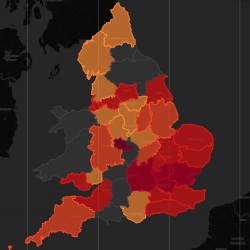
AI mapping tool
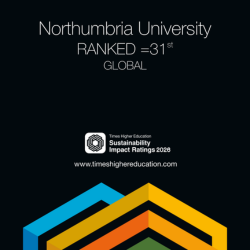
THE Rankings
The North Edit
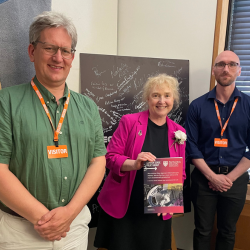
Professor Howard Reed from ֲýƵ, Irene Campbell MP, Chair of the All-Party Parliamentary Group on Phasing Out Animal Experiments in Medical Research, and Professor Elliott Johnson from ֲýƵ.
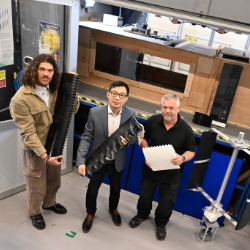
three man standing in front of a wind tunnel holding prototype parts of a wind turbine blade
Dr Colin Richardson, an Assistant Professor in Business Information Systems and Data Analytics, has been awarded an OBE for services to fire service operations and firefighter safety.
More events

Upcoming events

REVEAL Architecture
-
REVEAL Interior Design
-
REVEAL Fashion Exhibition
-
REVEAL Graphic Design
-

Page last updated 25/01/24

Back to top