
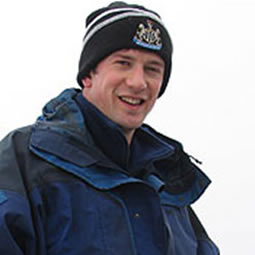
 I am
interested in the hydrology of cold environments and how the frozen land
surface interacts with the atmosphere. Most of my current research focuses on
making improved field measurements of seasonal snow and applying this knowledge
in order to better constrain uncertainties in environmental models. Models I
work with include catchment scale glacio-hydrological models,
snow-forest-atmosphere components of climate models, and radiative transfer
models used in microwave remote sensing of snowpacks.
I am
interested in the hydrology of cold environments and how the frozen land
surface interacts with the atmosphere. Most of my current research focuses on
making improved field measurements of seasonal snow and applying this knowledge
in order to better constrain uncertainties in environmental models. Models I
work with include catchment scale glacio-hydrological models,
snow-forest-atmosphere components of climate models, and radiative transfer
models used in microwave remote sensing of snowpacks.
I have extensive experience of making snow measurements in boreal and mid-latitude forests (e.g. Switzerland, Sweden, Finland, Rocky Mountains in Canada and USA), Arctic and sub-Arctic tundra (Alaska, USA, and Manitoba, Canada), sea ice (Canadian high-Arctic), and on Alpine and Polar glaciers (e.g. Switzerland, Svalbard). As many of these environments are rapidly responding to a warming climate, better measurement, modelling and critical evaluation of variations in seasonal snow contribute to improved projections of climate change and our understanding of cold regions hydrology.
I am interested in the hydrology of cold environments and how the frozen land surface interacts with the atmosphere. Most of my current research focuses on making improved field measurements of seasonal snow and applying this knowledge in order to better constrain uncertainties in environmental models. Models I work with include catchment scale glacio-hydrological models, snow-forest-atmosphere components of climate models, and radiative transfer models used in microwave remote sensing of snowpacks.
I have extensive experience of making snow measurements in boreal and mid-latitude forests (e.g. Switzerland, Sweden, Finland, Rocky Mountains in Canada and USA), Arctic and sub-Arctic tundra (Alaska, USA, and Manitoba, Canada), sea ice (Canadian high-Arctic), and on Alpine and Polar glaciers (e.g. Switzerland, Svalbard). As many of these environments are rapidly responding to a warming climate, better measurement, modelling and critical evaluation of variations in seasonal snow contribute to improved projections of climate change and our understanding of cold regions hydrology.
- Simulating snow properties and Ku-band backscatter across the forest-tundra ecotone, Woolley, G., Rutter, N., Wake, L., Vionnet, V., Derksen, C., Meloche, J., Montpetit, B., Leroux, N., Essery, R., Hould Gosselin, G., Marsh, P. 23 Feb 2026, In: The Cryosphere
- UK Arctic Terrestrial Research: Towards International Polar Year 2032/33 and Beyond: Research Strengths, Priorities and Implementation, Phoenix, G., Harding, M., Hartley, I., Lancastle, L., Murton, J., Parker, T., Rutter, N., Street, L., Abbott, G., Barr, I., de la Barreda-Bautista, B., Belcher, A., Burke, E., Cameron, K., Chaturvedi, V., Clarkson, A., Convey, P., Crouch, J., Dalrymple, S., Dasari, S., Dutch, V., Hilton, B., Hirst, C., Hole, G., Kerby, J., Keskitalo, K., Lim, M., Macias-Fauria, M., Mayfield, R., Palmer, P., Pearce, D., Peck, L., Robinson, C., Sjögersten, S., van Soest, M., Streeter, R., Sulikova, S., Swainston, O., Wookey, P. 24 Mar 2026
- A Flexible Snow Model (FSM 2.1.1) including a forest canopy, Essery, R., Mazzotti, G., Barr, S., Jonas, T., Quaife, T., Rutter, N. 18 Jun 2025, In: Geoscientific Model Development
- Enhancing simulations of snowpack properties in land surface models with the Soil, Vegetation and Snow scheme v2.0 (SVS2), Vionnet, V., Leroux, N., Fortin, V., Abrahamowicz, M., Woolley, G., Mazzotti, G., Gaillard, M., Lafaysse, M., Royer, A., Domine, F., Gauthier, N., Rutter, N., Derksen, C., Bélair, S. 27 Nov 2025, In: Geoscientific Model Development
- Impact of snow thermal conductivity schemes on pan-Arctic permafrost dynamics in the Community Land Model version 5.0, Damseaux, A., Matthes, H., Dutch, V., Wake, L., Rutter, N. 14 Apr 2025, In: The Cryosphere
- Snow thermal conductivity controls future winter carbon emissions in shrub-tundra, Rutherford, J., Rutter, N., Wake, L., Cannon, A. 29 Sep 2025, In: Biogeosciences
- Exploring the decision-making process in model development: focus on the Arctic snowpack, Menard, C., Rasmus, S., Merkouriadi, I., Balsamo, G., Bartsch, A., Derksen, C., Domine, F., Dumont, M., Ehrich, D., Essery, R., Forbes, B., Krinner, G., Lawrence, D., Liston, G., Matthes, H., Rutter, N., Sandells, M., Schneebeli, M., Stark, S. 9 Oct 2024, In: The Cryosphere
- Multi-physics ensemble modelling of Arctic tundra snowpack properties, Woolley, G., Rutter, N., Wake, L., Vionnet, V., Derksen, C., Essery, R., Marsh, P., Tutton, R., Walker, B., Lafaysse, M., Pritchard, D. 6 Dec 2024, In: The Cryosphere
- Simulating net ecosystem exchange under seasonal snow cover at an Arctic tundra site, Dutch, V., Rutter, N., Wake, L., Sonnentag, O., Hould Gosselin, G., Sandells, M., Derksen, C., Walker, B., Meyer, G., Essery, R., Kelly, R., Marsh, P., Boike, J., Detto, M. 15 Feb 2024, In: Biogeosciences
- Simulation of Arctic snow microwave emission in surface-sensitive atmosphere channels, Sandells, M., Rutter, N., Wivell, K., Essery, R., Fox, S., Harlow, C., Picard, G., Roy, A., Royer, A., Toose, P. 4 Sep 2024, In: The Cryosphere
- Gabriel Hould Gosselin Measurement and modelling of carbon emissions in snow-covered Arctic tundra and taiga biomes Start Date: 01/10/2023
- Georgina Woolley Measurement and modelling of Arctic snow across the forest-tundra ecotone Start Date: 01/10/2021 End Date: 27/06/2025
- Jonathan Rutherford Simulating Arctic snow using process-based and machine learning approaches for future carbon flux projections Start Date: 01/10/2022 End Date: 21/02/2026
- Gabriel Hould Gosselin Measurement and modelling of carbon emissions in snow-covered Arctic tundra and taiga biomes Start Date: 01/10/2023 End Date: 17/10/2025
- Jonathan Rutherford Simulating Arctic snow using process-based and machine learning approaches for future carbon flux projections Start Date: 01/10/2022 End Date: 17/10/2025
- Amy Clark ??Quantifying the effects of wildfire forest disturbance on snow? Start Date: 01/10/2023
- Amy Clark Forest disturbance effects on snow hydrology in an operational runoff forecast model Start Date: 01/10/2023 End Date: 17/10/2025
Geography DPhil June 30 2002
Latest News and Features
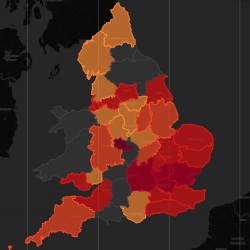
AI in policing: safeguards can't keep up, new research warns
Artificial intelligence is being adopted across policing and the wider criminal justice system…
Northumbria in top 35 universities worldwide for sustainability
ÀÖ²¥´«Ã½ÊÓƵ is officially one of the best universities in the world for sustainability,…
.png?modified=20260624091022)
ÀÖ²¥´«Ã½ÊÓƵ launches The North Edit Magazine
ÀÖ²¥´«Ã½ÊÓƵ has published the first edition of The North Edit, a new high-quality…
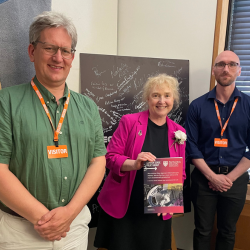
Northumbria researchers provide economic evidence base for shift away from animal testing
New research commissioned by Lush shows the UK's non-animal methods sector grew to more than…

More power, less noise: what wind energy can learn from wildlife
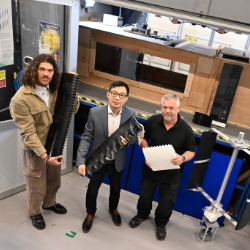
A ÀÖ²¥´«Ã½ÊÓƵ researcher has secured a prestigious national grant to redesign wind…
More events
Upcoming events

-
REVEAL Architecture
Architecture Studios

-
REVEAL Interior Design
City Campus East 2


-
REVEAL Fashion Exhibition
City Campus East 2
