
Katherine Butler is a music historian with particular interests in the musical culture of England, c.1550-1800.Â
Katherine studied at The Queen’s College, University of Oxford and then took her PhD at Royal Holloway, University of London. After teaching for the Open University and working on the Early Music Online digitisation project (), she returned to Oxford in 2011 to take up a British Academy Postdoctoral Research Fellowship. She remained in Oxford as a researcher for the AHRC-funded Tudor Partbooks project () before moving to the University of Leeds to manage an OfS-funded project across five institutions, focused on improving progression to postgraduate taught study among BAME students and those from areas with low rates of participation in higher education ().
Katherine joined ÀÖ²¥´«Ã½ÊÓƵ as a senior lecturer in January 2019. In 2025-26 she held a British Academy Mid-Career Fellowship
She is currently an Associate Professor and Outreach and Recruitment Co-Ordinator for Humanities and Social Sciences. She is also an editor for the journal Music & Letters, on the editorial board for Sonance: Journal of Early Modern Studies, and a trustee for the charity North Tyneside Music Opporunities for Young People.

My research focuses on the musical culture of England c.1550-1800 and encompasses a wide range of themes including court music, civic pageantry, ballads and popular song, social and community music-making, gender, death songs and elegies, music or health and wellbeing, music philosophy, music in mythology and literature, manuscript studies, and early music printing.
My first book explored the political uses of music at the court of Queen Elizabeth I (1558-1603). I reconstructed the significance of musical performances ranging from grand court pageantry to intimate music-making in the royal household to understand both the importance of music in Elizabeth’s royal image and how performances might be manipulated by courtiers and the nobility for their own ends. An off-shoot of this project also considered how cheaply printed and orally circulated songs for celebrating the Queen’s Accession Day shaped her image among the broader populace, and the extent to which these were official propaganda, opportunistic commercial exploitation, or genuine expressions of affection.
My second major project used myths and stories as windows onto musical thought in early modern England. Particularly fascinating was the how the increasing influence of empirical and experimental philosophy altered the reception of traditional stories about the powers of music, which opened up my interests in music’s place in early modern science and medicine.
Working on the Tudor Partbooks project provided an opportunity to develop skills in the digitisation reconstruction of damaged manuscripts and to pursue my interests in manuscript culture and early music printing. My extensive study of the only complete manuscript source of Protestant service music from the early years of the Elizabeth I’s reign (the ‘Hamond’ partbooks), shed light on liturgical practices and the training of boy choristers in this second phase of the Reformation, as well as music-making in Protestant households.
My current research is revealing the diverse social functions of rounds and catches - simple polyphonic songs like 'London's Burning' or 'Row Your Board' that straddled oral and literate culture - c.1550-1650. I'm fascinated by how such ubquitous recreational singing could be both community-building and anti-social, humorous or playful as well as devotional or spiritual, while spanning class and educational boundaries. I am also experimenting with reviving social catch-singing through Pop Up Community Catch Clubs and programmes fo schools and youth groups.
- Music in Elizabethan Court Politics, Butler, K. Jan 2015
- Music, Myth, and Story in Medieval and Early Modern Culture, Butler, K., Bassler, S. Mar 2019
- The Heroic in Music, Kutschke, B., Butler, K. Apr 2022
- From Liturgy and the Education of Choirboys to Protestant Domestic Music-Making: The History of the ‘Hamond’ Partbooks (GB-Lbl: Add MSS 30480-4), Butler, K. 2019, In: RMA Research Chronicle
- Divine Harmony, Demonic Afflictions, and Bodily Humours: Two Tales of Musical Healing in Early Modern England, Butler, K. 10 May 2021, Perfect Harmony and Melting Strains, Berlin, De Gruyter
- Changing Attitudes Towards Classical Mythology and their Impact on Notions of the Powers of Music in Early Modern England, Butler, K. 2016, In: Music and Letters
- Printed Borders for Sixteenth-Century Music or Music Paper and the Early Career of Music Printer Thomas East, Butler, K. 1 Jun 2018, In: Library
- In Praise of Music: Motets, Inscriptions and Musical Philosophy in Robert Dow’s Partbooks, Butler, K. 1 Feb 2017, In: Early Music
- Death Songs & Elegies: Singing about Death in Elizabethan England, Butler, K. 1 May 2015, In: Early Music
- Myth, Science, and the Power of Music in the Early Decades of the Royal Society, Butler, K. Jan 2015, In: Journal of the History of Ideas
- Organising a conference, workshop, ...: Medieval and Renaissance Music Conference 2025
- Editorial work: Sonance: A Journal of Early Modern Sound Studies (Journal) 2024
- Editorial work: Music and Letters (Journal) 2024
- Other: External PhD Supervisor (Stephen Hamilton-Box) 2023
- Editorial work: Renaissance Quarterly (Journal) 2023
- Organising a conference, workshop, ...: BFE/RMA Research Students' Conference 2023
- Other: External PhD Supervisor (Erin Petti) 2020
- Rudolf Balázs ‘Move now with measured sound’: Measure and Intermediality in the Creative Practice of Thomas Campion (1567 - 1620) Start Date: 01/10/2025
- Harry Sullivan The Post-Reformation English Organ: Practice-led Research on its Changing Repertoire and Use, 1525-1649 Start Date: 05/02/2026 End Date: 16/04/2026
- Sebastian Jørgensen ‘Pri re la,’ Melodia, and Repercussio: Conceptual Changes in Modal Theory in Music Treatises from German-Speaking Lands, 1500-1550 Start Date: 01/10/2022 End Date: 22/02/2026
- Abigail Harrison An intersectional understanding of the barriers faced by 'non-traditional' PhD students, within Arts, Social Sciences and Humanities across the universities of the North East of England, from application to completion. Start Date: 01/07/2024 End Date: 17/10/2025
- Abigail Harrison An intersectional understanding of the barriers faced by 'non-traditional' PhD students, within Arts, Social Sciences and Humanities across the universities of the North East of England, from application to completion. Start Date: 01/07/2024
- Sebastian Jørgensen ‘Pri re la,’ Melodia, and Repercussio: Conceptual Changes in Modal Theory in Music Treatises from German-Speaking Lands, 1500-1550 Start Date: 01/10/2022 End Date: 17/10/2025
- Music PhD July 01 2011
- Music MA July 01 2007
- Music BA (Hons) July 01 2006
- Fellow of the Higher Education Academy FHEA 2013
Latest News and Features
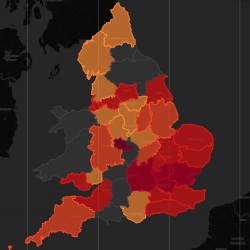
AI in policing: safeguards can't keep up, new research warns
Artificial intelligence is being adopted across policing and the wider criminal justice system…
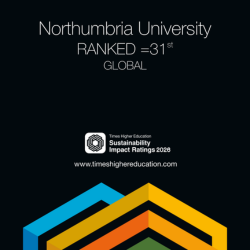
Northumbria in top 35 universities worldwide for sustainability
ÀÖ²¥´«Ã½ÊÓƵ is officially one of the best universities in the world for sustainability,…
.png?modified=20260624091022)
ÀÖ²¥´«Ã½ÊÓƵ launches The North Edit Magazine
ÀÖ²¥´«Ã½ÊÓƵ has published the first edition of The North Edit, a new high-quality…
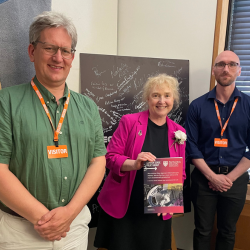
Northumbria researchers provide economic evidence base for shift away from animal testing
New research commissioned by Lush shows the UK's non-animal methods sector grew to more than…

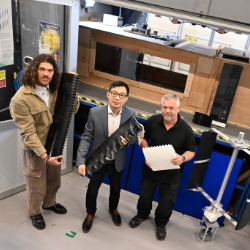
More power, less noise: what wind energy can learn from wildlife
A ÀÖ²¥´«Ã½ÊÓƵ researcher has secured a prestigious national grant to redesign wind…
More events
Upcoming events

-
REVEAL Architecture
Architecture Studios

-
REVEAL Interior Design
City Campus East 2


-
REVEAL Fashion Exhibition
City Campus East 2
